In the TOPCon cell Polyfinger process, the RCA cleaning step after rear-side laser patterning is a critical stage that determines cell performance. The morphology quality of the laser-treated areas directly affects subsequent passivation effectiveness, while the non-laser areas require intact preservation of the alkali-polished pyramid base and Poly layer to maintain good passivation quality. Conventional additives struggle to balance these two requirements—either the laser areas exhibit poor etch morphology with high surface roughness, affecting the coverage uniformity and interface quality of the subsequent aluminum oxide passivation layer, or the non-laser areas are insufficiently protected, resulting in excessive Poly layer etching and compromised passivation. This article introduces an RCA additive specifically developed for the TOPCon 3.0 Polyfinger process. Through a selective protection mechanism, it achieves a flatter and more uniform etch morphology in the laser areas under low weight loss conditions, while preserving the Poly layer in the non-laser areas intact.
When the total weight loss is controlled at the same level as the current production line, this additive can increase the pyramid base size in the rear laser area by 20%–40% (from 28–32 μm to approximately 35–45 μm).
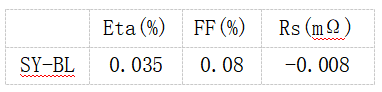
The core advantage of lower weight loss lies in reduced silicon material loss while achieving milder and more controllable etching in the laser areas. In the Polyfinger process, the differentiated protection mechanism of this additive ensures more uniform etching in the laser areas, avoiding excessive surface roughness caused by localized over-etching. The flatter laser area surface facilitates uniform coverage of the subsequent ALD-AlOₓ passivation layer, enhancing field-effect passivation quality. Meanwhile, lower weight loss means shallower etch depth and reduced lateral loss of finger spacing, improving carrier collection efficiency, thereby reducing Rs and increasing FF.
The electrical performance advantages of this additive under low-weight-loss etching (relative difference):
When the total alkali polishing weight loss is controlled at the same level as the current production line, this additive can increase the pyramid base size in the rear laser area by 20%–40% (from 28–32 μm to approximately 35–45 μm).
The core advantage of larger pyramid bases is that, under the same weight loss conditions, larger pyramid bases provide a flatter substrate surface morphology in the laser areas with lower surface roughness, which facilitates uniform coverage of the subsequent ALD-AlOₓ passivation layer and enhances field-effect passivation quality. Additionally, larger pyramid bases correspond to lower specific surface area and surface recombination velocity, which is favorable for the simultaneous improvement of open-circuit voltage.
The electrical performance advantages of this additive under large-pyramid-base conditions (relative difference):
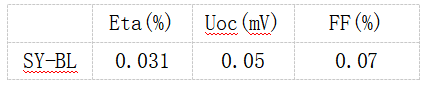
This RCA additive, through a selective adsorption protection mechanism, achieves differentiated etching control between laser and non-laser areas in the TOPCon 3.0 Polyfinger process: under the same pyramid base size, weight loss is reduced, laser area etching is flatter and more uniform, with FF improvement and Rs reduction; under the same weight loss, pyramid base size is increased, with slight gains in Uoc and FF. This solution provides a wider process window and superior electrical performance for the Polyfinger process, offering significant value for mass production application.

Contact person: Ms. Wu
Telephone: +8618961186739
Address:602 Building 4 East side of Nanbei Street
and North side of Market Road in Zouqu
Town,Zhonglou District, Changzhou City,
Jiangsu Province, China.
Email: lisawu@qihangenergy.com